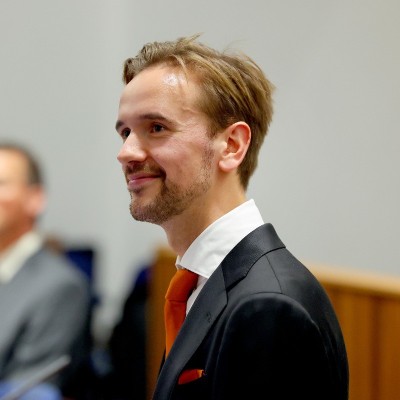
Willem Bosman successfully defended his thesis entitled ‘Many Meetings: Traditional and Novel Players in Magnesium Reabsorption’.
Outline of this thesis
Although the identification of various genetic causes of hypomagnesemia has led to the unraveling of a vast network of Mg2+-regulating processes, important open questions that need answering still remain. Some of the most poignant ones include the phenotypic variability of patients with hypomagnesemia and related disorders, the molecular identity of the basolateral Mg2+ extruder in the DCT, the exact functions of the CNNMs and the mechanism explaining how essential, ubiquitous pathways (such as mitochondrial functioning and mTORC1 signaling) can cause specific tubulopathy phenotypes. This thesis aims to address some of these questions. In Chapter 2, additional hypomagnesemia-causing variants in CNNM2 are characterized in order to enhance understanding of the genotype-phenotype relationship in this disorder. Chapter 3 focuses on novel variants in TRPM7, with the aim to confirm that heterozygous TRPM7 variants can indeed be pathogenic and to expand the associated phenotypic spectrum. Chapter 4 looks into whether TARS2 variants found in patients with hypomagnesemia mainly affect the mitochondrial or the mTORC1-related function of the TARS2 protein. Chapter 5 focuses on the basolateral Mg2+ extrusion mechanism in the DCT and describes how an alternative isoform of SLC41A3 may play an important role.
Biography
Willem Bosman is a PhD candidate at the department of Physiology (later named Medical BioSciences) studying genetic kidney diseases with dr. De Baaij and prof. dr. Joost Hoenderop. He focused on the identification of genetic causes of hypomagnesemia and the clarification of the underlying molecular mechanisms. Willem published his findings in peer-reviewed journals and presented them at scientific meetings.
 Kidney Physiology